Defined permissions.
Choose the accounts, markets, actions, limits, and expiry. Permission checks govern execution.
One familiar face. Research, portfolio insight, and plans built around you. Meet your personal Mark I.
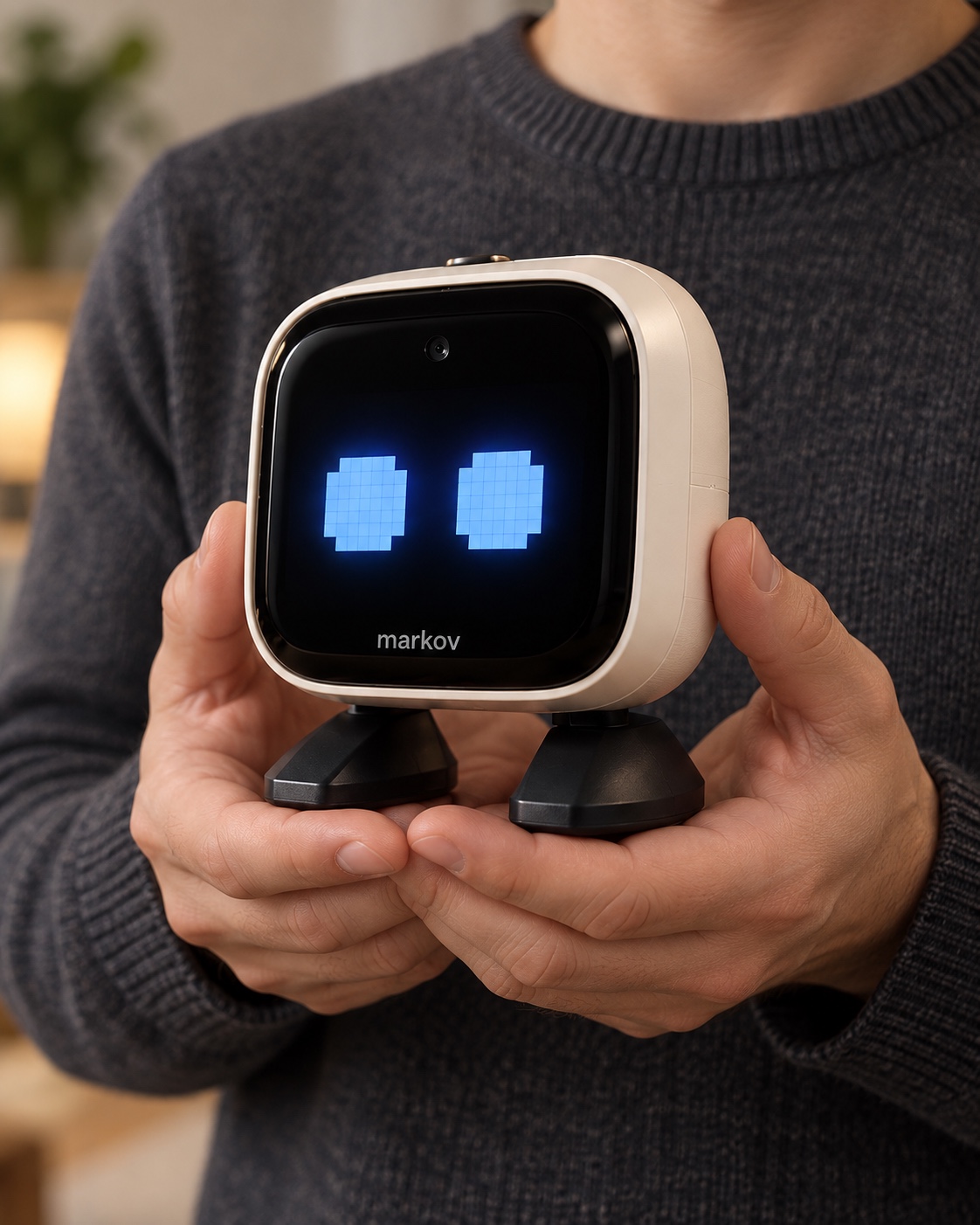
Product concept. Final hardware may change.
EXPLORE MARK IMarkov is building a persistent financial agent that remembers the context you approve and brings in research, portfolio, strategy, and risk specialists when useful. Mark I gives that team a face—and a place on your desk.
YOUR CONTEXT.The physical presence of your personal agent. The prototype connects to your laptop over USB-C.
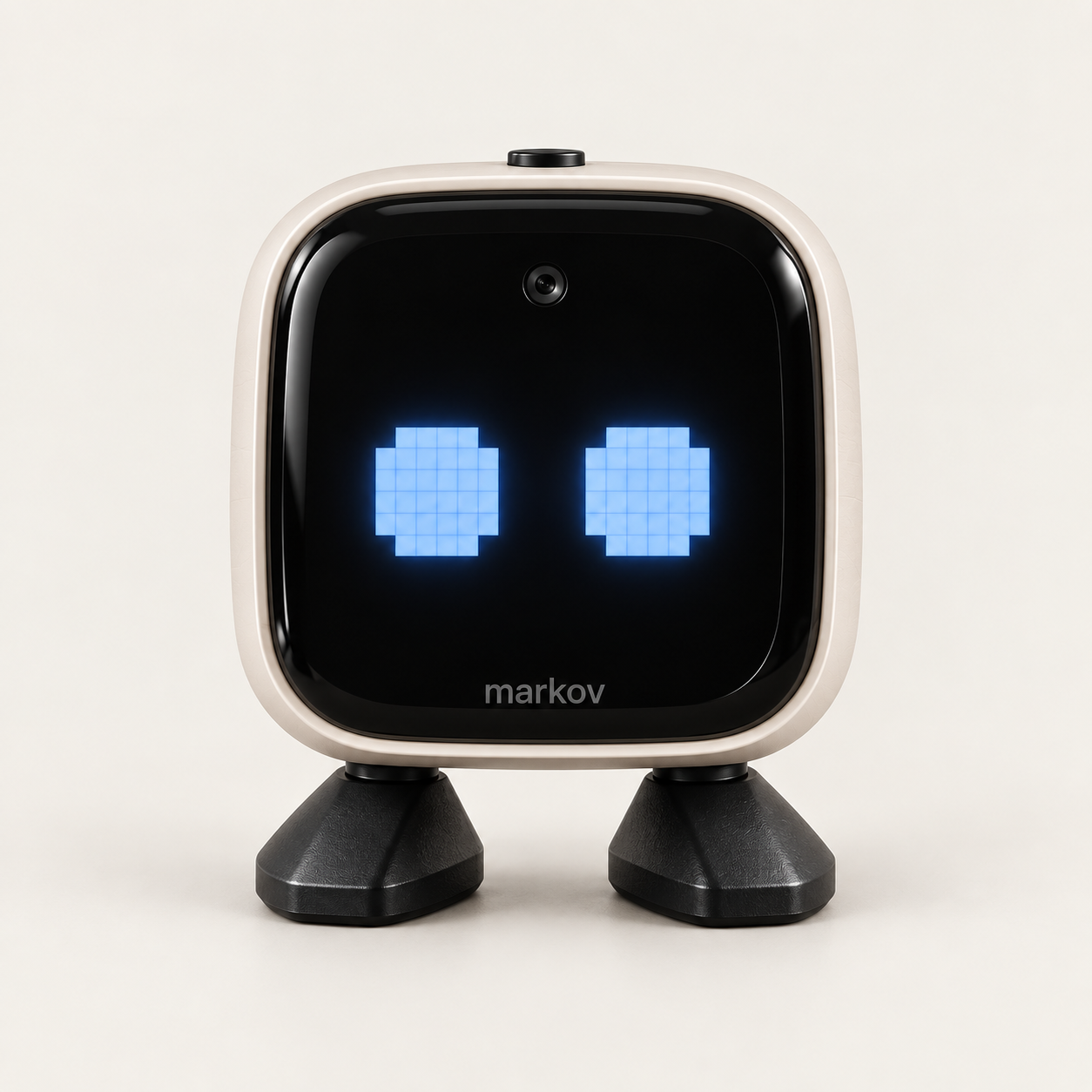
Concept renders. Final hardware may change.
Explore each view, or enlarge it for a closer look.
A name. A personality. The context you choose to share.
The same agent, on screen and on your desk.
Built for useful conversations—even on days you do not trade.
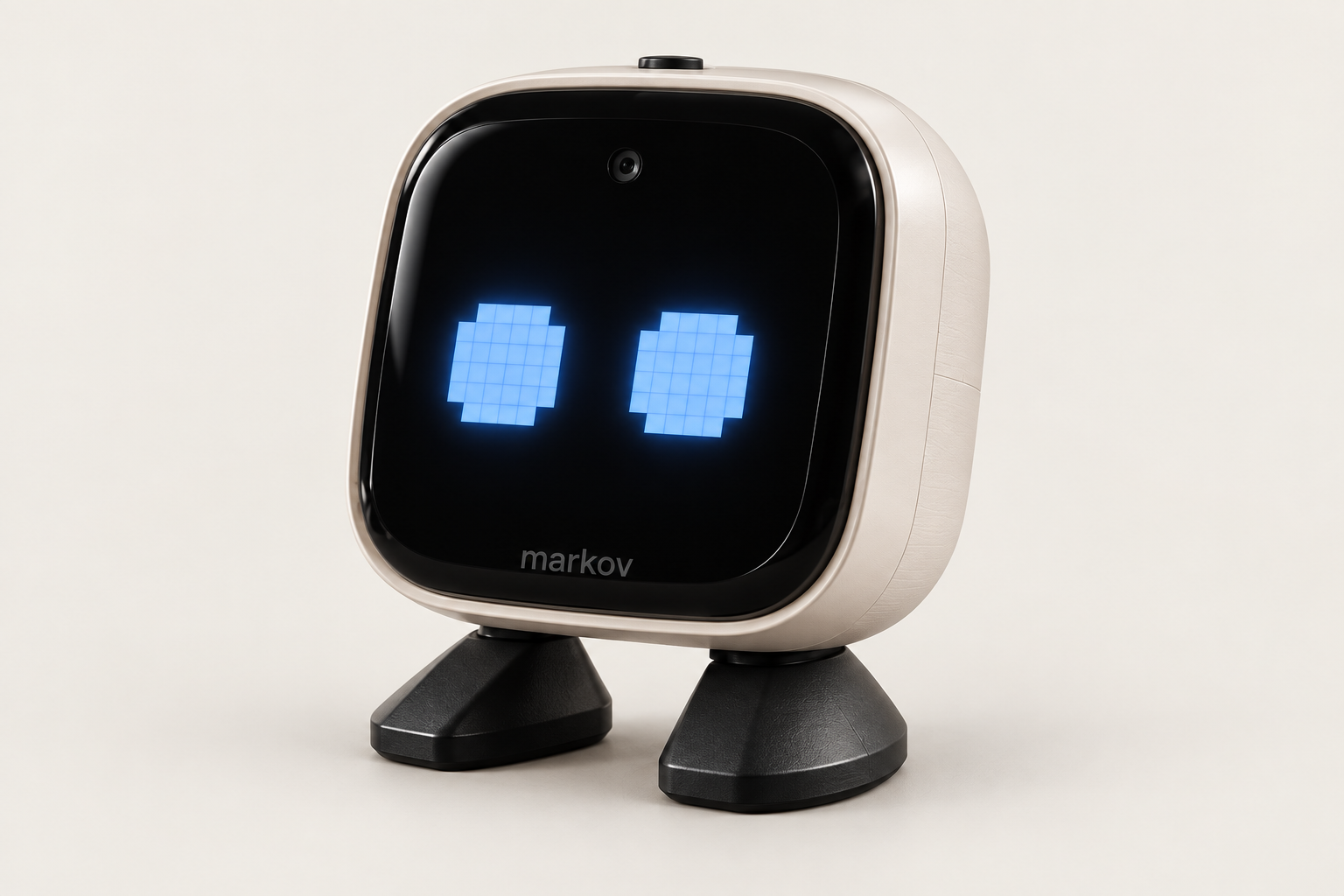 CONCEPT ANIMATION / PHYSICAL MOVEMENT UNCONFIRMED
From a question to a reviewable plan.
Every action needs the right authority.
Ask Mark I for a plan. Explore how it prepares, checks permissions, and waits for approval when required.
Choose the accounts, markets, actions, limits, and expiry. Permission checks govern execution.
Review the exact plan. Anything outside your granted authority pauses for approval.
See what was authorized, what happened, and what still needs attention.
NO AI WITHDRAWAL AUTHORITY. DELEGATION IS REDUCE-ONLY BY DEFAULT.
We’re exploring a hardware-wallet capability for Mark I. Your agent prepares a transaction. You independently review it, then physically press to sign.
Eyes, voice, research, connectivity, and transaction preparation. The AI helps you understand a plan; it would have no access to the owner wallet’s private keys.
A separate subsystem would control the private keys, trusted approval display, confirmation button, and signing. It would independently parse the actual transaction before asking you to approve.
Two isolated systems inside one enclosure. The design goal: even a compromised companion must be unable to extract keys, forge physical approval, or replace a transaction after you review it.
An example request, not a live quote. The trusted signing display would show the network, spending amount, minimum received, fees, and relevant recipient or contract permissions.
Markov builds a transaction from your request.
The signer parses the transaction itself, rather than trusting an AI-written summary.
You inspect the transaction details on a display controlled by the signer.
Your physical confirmation authorizes signing of those exact reviewed transaction bytes.
Markov submits the signed transaction and reports its result.
The first prototype would pair the ESP32 companion with an established external hardware wallet. Mark I prepares and explains; the wallet performs the trusted review and signing. An integrated version would follow only after its signing path is built, tested, and independently reviewed.
The proposed starting point is a dedicated signing display and button controlled by the signer. Reusing Mark I’s face screen would require a secured hardware handover. A software overlay, or a button that merely tells the backend “approved,” does not establish hardware-wallet security.
The requirements include protected key storage, secure boot, authenticated updates, rollback protection, PIN protection, secure recovery, and independent hardware and firmware review. A secure element is one component of that design. ESP32 secure boot and flash encryption alone would not establish a secure hardware wallet.
Owner-wallet signing would require your physical approval for each transaction. Optional background execution would need a separately approved, restricted delegation with enforceable limits. It would not give the AI unrestricted use of the hardware wallet. A wallet alone cannot enforce Markov’s daily-loss rules or make a strategy safe.
This is a proposed capability, not a verified or shipping hardware wallet. Final hardware, supported transactions, availability, and security properties remain subject to development and validation.
We’re building connected workflows for research, tokenized stocks, baskets, and perps.
Each capability opens as it is verified.
One account, saved context, and decision history across the software workspace and Mark I. Adding a device keeps the same agent.
In development · Software and hardwareSpecialists help explain your portfolio and prepare a plan. Authorized cloud routines are designed to keep working while your device is offline.
In development · Terminal, MCP, and APIGive your agent an identity. Later, publish selected services and optionally launch its own token. Private memory and account permissions stay separate.
Planned · Tokenization is optionalJoin the waitlist or reserve priority access to the first device.
Follow the agent, software, and device as they take shape.
FreeA reservation, not a device purchase or guaranteed shipping position. Final price and delivery timing are not announced. Testing invitations and free devices are not guaranteed.
Check the address. Review the transaction.
Keep the confirmation.